
Revisiting Our Beginnings
Stockton’s early population was Catholic, but the Reformation made it almost entirely Church of England. A small Catholic community remained, worshipping in a modest chapel. Industrial growth in ship repair, steel, and chemicals attracted many immigrants, especially Irish Catholics, creating demand for a larger church.
The Roman Catholic Relief Act of 1791 marked a turning point in British religious policy. For over two centuries after the Reformation, Catholics faced severe legal restrictions: they could not openly practice their faith, hold public office, or run schools. The Act eased these penalties, allowing Catholics to worship legally and establish schools and chapels—provided they were registered and met certain conditions. However, some limitations remained: chapels could not have steeples or bells, priests could not wear vestments in public, and monastic orders were still banned. This legislation reflected a broader shift toward religious tolerance in Britain, influenced by Enlightenment ideals and similar reforms in Europe, such as France’s Edict of Versailles in 1787. St. Mary’s was the first permanent Roman Catholic church built in Teesside since the Reformation, marking a major milestone for Catholics in the region.
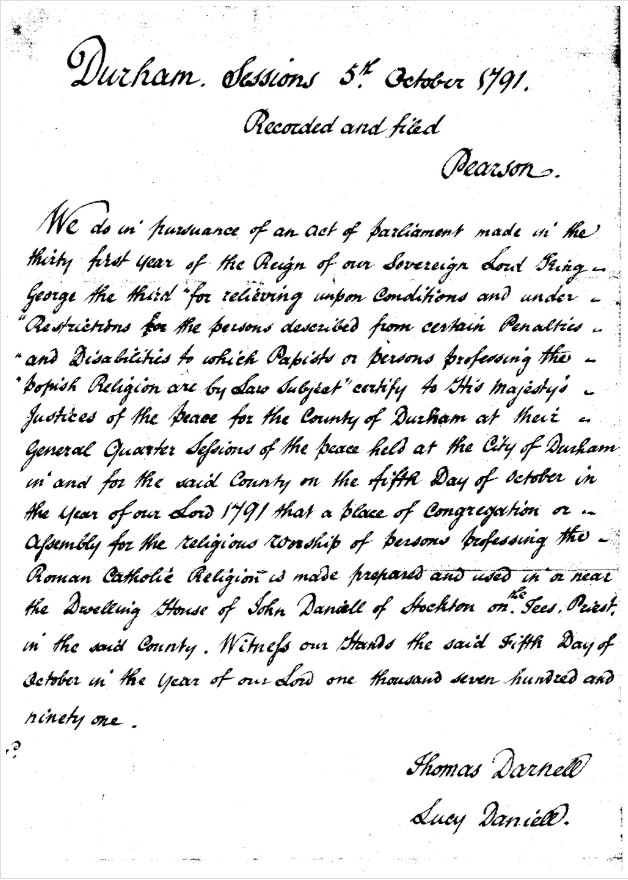
Below is copy of the registration transcript (dated 5th October 1791) giving permission for a chapel in the residence of John Daniell (a Roman Catholic Priest) of Stockton-on-Tees. This chapel was used up until 1842 when our current Church was opened.
For decades, it was the only Catholic church in Stockton. It later helped establish missions that became other parishes, such as St Cuthbert’s (opened 1958).
Construction Timeline:
1790: A small Catholic chapel existed in Stockton.
1842: Current church opened by Bishop Francis Mostyn.
1866: North aisle and lower tower added.
1870: South aisle and sanctuary added.
1909: Upper tower and presbytery completed.
1970: Sanctuary reordered and roof replaced.